
Avoiding the "Equipment Trap"
Avoiding the “Equipment Trap”
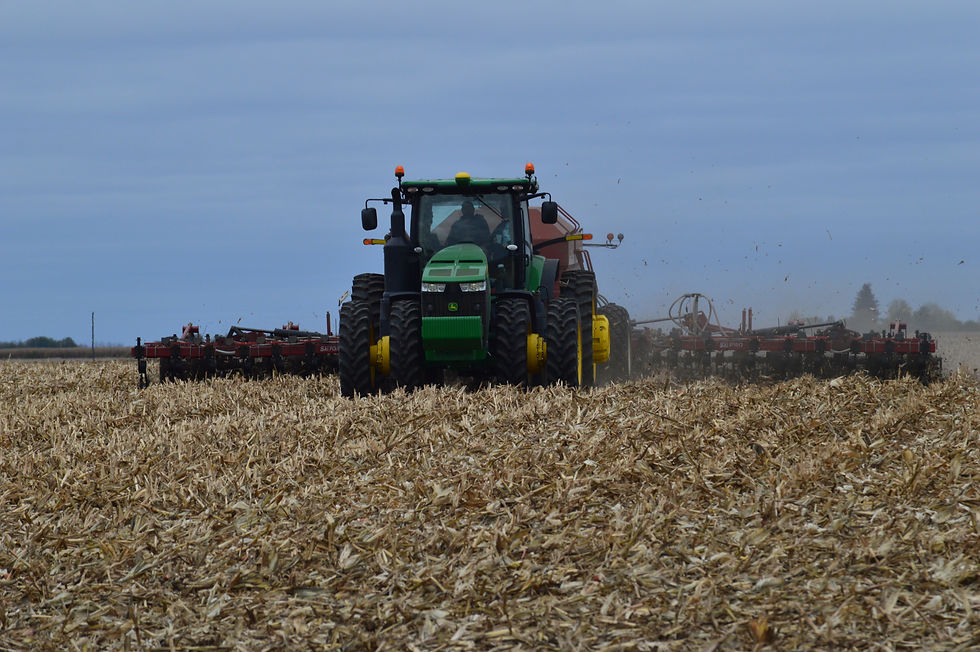
It’s easy to fall into the equipment trap: we assume that because we already own a tool, it must be the best tool for every job. In agriculture, that mindset can quietly turn good intentions into disappointing results—especially if the tool restricts timing. I see this often during cover crop planning conversations. The temptation is understandable: using owned equipment feels efficient and “saves money” on paper. But when the method forces a late application window, the cover crop may never get enough growing days to deliver the benefits we’re paying for. The result is a plan optimized for convenience, not performance.
A Common Scenario:
The Farmer's Plan: “I own an air seeder, so I’m going to put all my cover crops on after harvest to avoid application fees. I want to seed rye and camelina on my fields that were corn and will be soybeans next year, and an oat/legume/brassica mix on the fields going to corn.”
My Recommendation: “An air seeder is a great tool, and it can work really well for the rye & camelina ahead of soybeans. But for the fields going to corn where those species winterkill, seeding after harvest usually isn’t a great fit because the stand is so dependent on getting enough fall growth. Could you either aerially apply those fields earlier, or switch to species that can be planted later and still succeed?”
The Farmer's Response: “No, I bought the air seeder to use it, and I don’t want to pay anybody else. I’m also leery of having a lot of species to terminate before corn, so I’m just going to try it.”

The Real Cost of 'Savings'
In this situation, pre-harvest application is often the difference between a cover crop that delivers value and one that barely establishes. The goal is to maximize fall growing days, and that typically means seeding earlier, than an after-harvest window allows—especially for mixes that winterkill and need meaningful growth before cold weather, or species that fix nitrogen. When we look at true costs, the “cheaper” option is not always the most economical. A successful pre-harvest aerial application might cost about $45/acre ($15 drone + $30 seed), but it’s far more likely to produce the stand needed for measurable benefit. By contrast, self-applying after harvest might pencil out to $38/acre ($8 fuel/labor + $30 seed), yet the odds of success drop sharply when planting is delayed. That $7/acre difference feels like savings until you consider the outcome. If poor timing leads to a weak stand and minimal benefit, the “savings” becomes a $38/acre loss because you paid for seed and spent fuel and time without getting results. In cover crops, timing is critical—and it often matters more than the equipment used to get the seed out there.
The best cover crop plans start by choosing the right tool and timing for the agronomic goal—not by forcing a preferred piece of equipment into every field and situation. Owned equipment can be a major advantage when it fits the window and the species, but it shouldn’t dictate the strategy. When the method pushes seeding too late, the operation isn’t saving money—it’s risking the entire return on the investment. Avoid the equipment trap by planning around success first, and letting equipment support the plan, rather than control it. Successful farmers know that adaptability is an asset and they adjust as the weather and goals change!

Comments